
September 16, 2019
Introduction
Founders Baiju and Vlad had their start selling trading software to large hedge funds. According to their website, they had an issue with large Wall Street firms paying essentially close to nothing for trades the average consumer would pay $10 for. Robinhood’s business model and its primary appeal to the millennial demographic is its promise- its mission to democratize access to the financial markets. Arguably, this is what they have done. Robinhood has definitely set the precedent or other discount brokers that have reduced commissions recently such as Charles Schwab and others including Merrill Edge. I believe that Robinhood is great, the devil is in the details. I believe millennials aren’t grasping how this “democratizing” platform really works.
A Little Background:
Robinhood’s main selling point is its commission free trades and it lack of “hidden fees.” This is in the backdrop of the American discount brokerage market that’s always had large minimum deposit requirements even before the SEC made this standard practice in 2002. Most of this was to safeguard the operations of the brokerages who partook in margin lending. Usually giving 4:1 “leverage” to traders; lending money to make 30k trade like 120k. Since the 90’s trading fees have ranged from $6 to $10 per trade. This is definitely more than Wall Street’s “$0”.
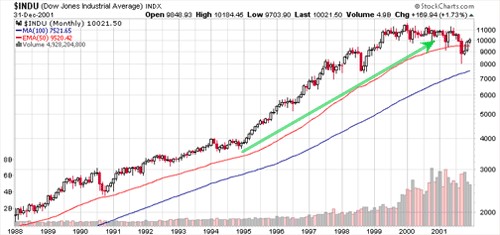
The 1990s and dot com boom of the 2000’s had given the middle classes access to markets that otherwise were only really interacted with by the wealthy and their financial planners. The term “discount broker” comes from this fact. Most of the larger investment banks turned a blind eye to the online middle class trader in the early stages of this move. The startups who opened themselves to regular Americans set the precedent for larger investment banks that began opening margin accounts for online trading. This greatly increased access to the markets.
Asset classes that can be traded through Robinhood include stocks, ETF’s, options, and cryptocurrency. Their stock and ETF trading is commission-free. Robinhood began offering commission-free options trading after December 2017. They also have free crypto trading through Robinhood Crypto.
How do they offer “free” trades?
Despite being “anti-Wall Street”, the company was founded by individuals who sought to make Wall Street hedge funds their clients with their premier trading software. They accomplished this. (Robinhood has received more than half of its revenue FROM high frequency trading firms and market market makers on Wall Street.) This is antithetical to their mission statement.
The nature of their business revolves around using what’s known as a “dark pool” to pump liquidity that HFT and market makers want. This of course is at the expense of ordinary Robinhood users who ironically have LESS access to the markets that Robinhood sought to give them access to.
A dark pool is created by holding onto orders and linking them together before sending them out. This was originally designed to decrease volatility (or large spreads/ crazy fluctuations in the markets). Dark pools are a mixed bag in that they have helped decrease volatility, but have also introduced channels for predatory Wall Street firms to exploit. Most dark pools are operated by large investment banks in the United States, although some are operated by smaller firms (like Robinhood). If you are interested in reading more about dark pools, I suggest picking up the best selling book “Flash Boys” by Micheal Lewis.
Robinhood sends customers’ orders to high-frequency trading firms like Virtu and Citadel Securities instead of a stock exchange like the NYSE. Maker-Taker rebates are then earned from these transactions. Maker-Taker rebates were originally created to incentivize liquidity formation in the markets. Again, this has been abused. Studies by University of Notre Dame finance professors Shane Corwin and Robert Battalio, and by Indiana University professor Robert Jennings both found stockbrokers regularly channeled client orders to markets providing the best payments, which yielded worse results than if the brokers hadn’t considered the payments.This actually decreases access to the markets for the ordinary trader.
Context and Conclusion
Amongst American discount brokers, trading fees have usually been around $6 – $10 per trade for decades. Sub $5 commissions have only really been offered by shady discount brokers overseas such as ZeroTrader which operates out of the Bahamas. Shockingly, they are more transparent than Robinhood about their maker-taker rebate model for free stock trading.
There is a silver lining to this, however. Recently, many large American brokers have begun offering commission-free stock trading due to pressure from Robinhood. TD Ameritrade, E-Trade, Merrill Edge, and Charles Schwab are among them. Below is a video from the David Rubinstein show where you can hear about the Schwab $0 commission decision.
Robinhood is great in its premise, but other discount brokers have been more transparent and have actually achieved its mission statement without all the tricks. I believe Main Street has been duped, but ultimately has come out better off in the end. Let’s hope this only leads to better days for everyone.
 Coyote Finance